

No code
A block for regions and Layout Builder, a field for content types, a button for CKEditor and a tag for any text.
Doxtly Forms is our module for Drupal: the person who looks after the site places a form the same way they place a block or an image. To get going, install it.
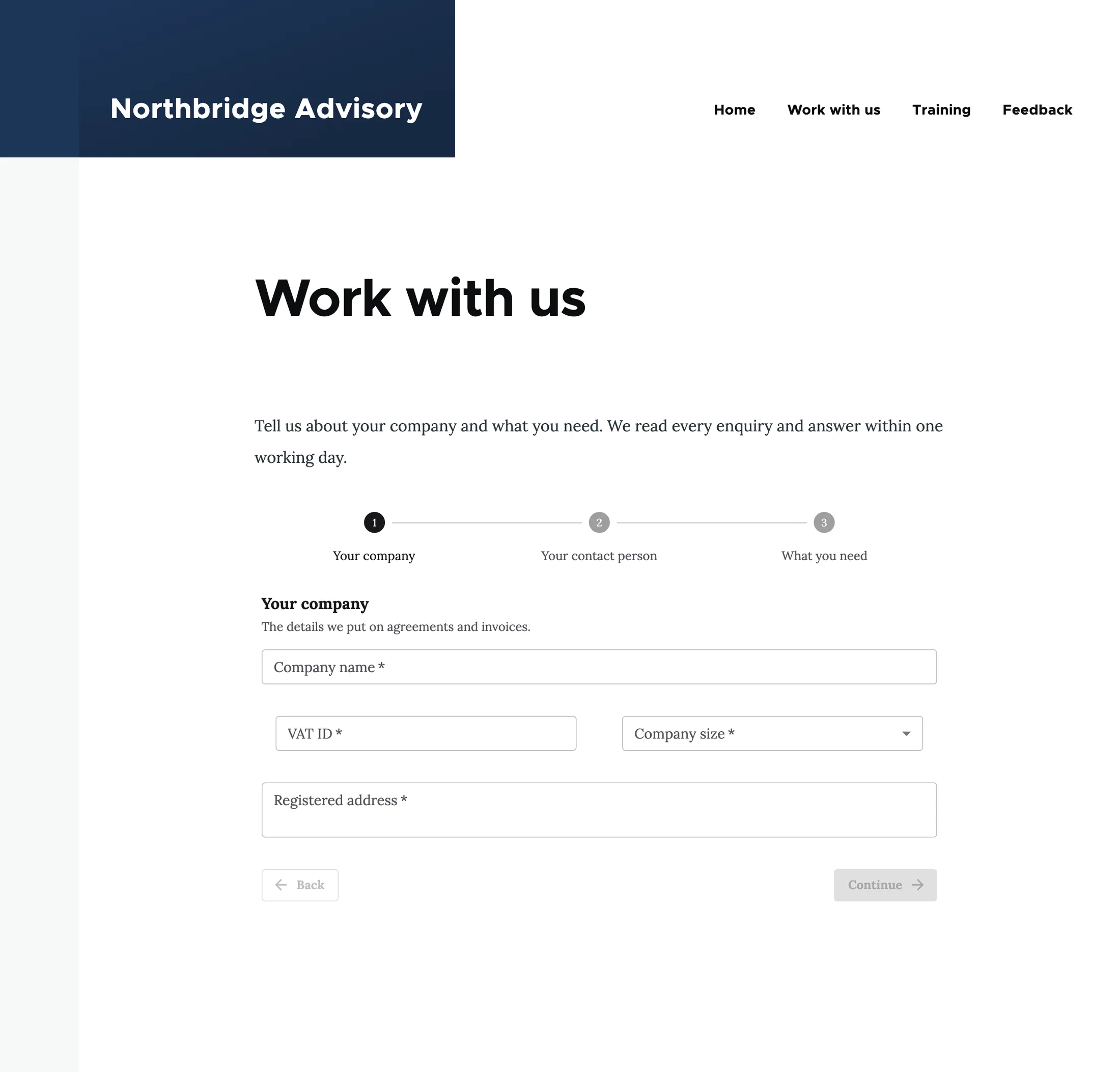
Northbridge Advisory’s website runs on Drupal. Its marketing colleague updates pages every week and has never written a line of HTML. With the module she clicks the Doxtly button in the editor, picks “Training enrolment” from a list and saves. Everything after that happens in Doxtly: the submission, the emails, the certificate, the signature.
No code
A block for regions and Layout Builder, a field for content types, a button for CKEditor and a tag for any text.
A list of your forms
With an access key saved, authors choose forms by name, and the editor button finds forms and interactive documents to link to. Nobody copies an ID.
Safe for your site
Scripts load only on pages that show a form, and the access key stays on the server.
A way out when things fail
If an ad blocker stops the form, visitors get a link to its page instead of a blank space.
Both end in the same form, with the same protection, workflows and submissions. The difference is who does the work and what happens around the form.
| Drupal module | Script or iframe pasted by hand | |
|---|---|---|
| Who can place a form | Anyone you give Use Doxtly Forms chooses from a list. See Who can do what. | Someone who is comfortable with HTML, in a text format that lets a script through |
| Choosing the form | By name, from a list | By copying its ID into a snippet |
| A form that was deleted or switched off | The block and the field warn about it | You find out from the live page |
| If the script is blocked | A link to the form’s own page | An empty space |
Your own code around the form, such as onSubmitted for analytics |
Not available | Available |
Extra parameters in the code, such as queryParams |
Not available. Parameters in the page’s address still reach the form. | Available |
On Drupal, take the module unless you need code of your own around the form. On any other system, use the script or an iframe.
The module places forms, quizzes and surveys and finds links. Interactive documents have no embed code and live on their own page, so a Drupal page can only link to them, and the editor button finds them for you. Templates, documents and signatures are not managed in Drupal, though a form on your site can start any of them through a workflow.
A few limits come from Drupal itself: